
JUSTIFICATION

“May you be strengthened in your inner being with power through his Spirit.”
Ephesians 3:16
In the context of Catholic teaching, the verse from Ephesians 3:16, “May you be strengthened in your inner being with power through his Spirit,” underscores the transformative work of the Holy Spirit within believers. This passage emphasizes the Holy Spirit’s essential role in nurturing a profound inner life that reflects God’s grace and power.
The concept of intrinsic righteousness, as articulated here, holds that proper justification and salvation arise from an authentic inner change and moral transformation. This transformation is not merely outward adherence to religious practices or a superficial acceptance of faith; instead, it involves a deep, personal conversion that leads to genuine ethical living and spiritual growth. The Catholic tradition teaches that this inner renewal is essential for aligning one’s life with God’s will and cultivating virtues such as love, compassion, and humility.
Furthermore, through the Holy Spirit’s empowerment, believers are equipped to overcome sin and grow in holiness, illustrating the profound relationship between faith and works in the journey toward salvation. Thus, the emphasis on intrinsic righteousness reminds the faithful that their spiritual journey is not a mere checklist of external actions but a dynamic process of becoming more like Christ through the transformative power of the Holy Spirit.

According to Catholic doctrine, justification is a multifaceted process integrating faith and works, emphasizing the transformative power of God’s grace in a believer’s life. This grace is viewed as an active force that enables individuals to lead lives pleasing to God and fosters a deep, personal relationship with Him. Central to this process is the role of the Holy Spirit, who empowers believers to grow in virtue, adhere to moral teachings, and engage meaningfully in the Church’s sacraments, such as Baptism and the Eucharist.
In this understanding, righteousness is not merely an external attribute imputed to the believer from without —that being the alien righteousness of Christ through faith alone —but rather an intrinsic change occurring within the believer’s heart and behavior. This transformation inspires a commitment to live out one’s faith through good works, reflecting the teachings and example of Jesus Christ. Such works are not merely obligations but expressions of sincere love and gratitude toward God, manifesting in daily life through acts of charity, justice, and mercy. Ultimately, the journey of justification is a continuous process of renewal and growth, culminating in deeper alignment with God’s will and a life enriched by divine grace.
In contrast, the Reformed Protestant doctrine of extrinsic righteousness presents a nuanced understanding of justification as a legal declaration made by God. This concept emphasizes that an individual is deemed righteous not on the basis of personal merit, moral achievements, or good works, but solely through faith in the redemptive merits of Christ.

According to this theological perspective, the alien righteousness of Christ is imputed to the believer; that is, upon embracing faith in Jesus, God the Father attributes Christ’s perfect righteousness to the believer. Consequently, God views them as righteous, not because of any innate qualities or actions of their own in God’s grace but entirely due to their trust in Christ’s sacrificial atonement. This pivotal belief underscores the transformative power of faith and highlights the central role of grace in the Protestant understanding of salvation, contrasting with other theological viewpoints that may emphasize human effort or virtue in achieving righteousness, rather than the Holy Spirit, who justifies us.
While both perspectives acknowledge the significance of Christ’s sacrifice, they differ in how they understand righteousness and how it is achieved and manifested in the believer’s life. Catholic teaching emphasizes inner transformation and continuous cooperation with divine grace, as Ephesians 3:16 underscores the Holy Spirit’s active role in shaping one’s moral character. This perspective encourages believers to view their faith as a dynamic relationship with God, fostering intrinsic righteousness that bears fruit (merit) in their actions and daily lives (cf. John 15:1-17).
In essence, this verse can be viewed as a profound affirmation of the Catholic belief in the essential role of inner spiritual strength. This strength is what fosters a deep, personal relationship with God, ultimately guiding individuals to express their faith through tangible actions. Such expressions are crucial for leading a life rooted in righteousness, aligning one’s daily choices and behaviors with God’s will. By cultivating this inner fortitude, believers are better equipped to navigate life’s challenges and uphold moral principles that reflect their commitment to their faith and community.

We often find the terms justification and sanctification used interchangeably, suggesting an affinity between the two concepts (Hebrews 13:12; Romans 5:9; 2 Thessalonians 2:13; 1 Corinthians 6:11). To gain a deeper understanding of how justification and sanctification coexist in the apostle’s theology, it’s helpful to examine the metaphysical framework proposed by the ancient Greek philosopher Aristotle. He introduced the four causes that explain the existence of all created things: efficient, material, formal, and final. In this context, formal causality is particularly relevant, especially in light of the Council of Trent’s definition of sanctification as “the single formal cause (causa formalis) of justification.” This definition highlights the role of sanctification in the instrumental application of redemption. As articulated in the Decree on Justification: Chapter 7, the single formal cause is identified as the justice of God, not in terms of His inherent righteousness, but as the means by which He makes us just. Through this divine justice, we are endowed and renewed in the spirit of our minds.
The formal cause of any entity encompasses the elements that define its conception or identity, representing the idea of a formative principle interacting with physical matter. In essence, every object or being is made up of both matter and form. The form serves as a determining principle that defines the characteristics of the object, whether it’s an oak tree or the concept of justification. Furthermore, the substantial form identifies the species or category to which the entity belongs, helping to differentiate it within a broader classification.
Justification is a crucial concept in God’s design, and it cannot fully fulfill its intended purpose without the principle of sanctification. Both justification and sanctification rely on the principle of efficient causality, which holds that an agent brings about a change for a specific purpose. In this framework, grace bestowed by God serves as the material cause, while Divine favor and Divine persuasion, facilitated by the Holy Spirit, represent the efficient cause. The Holy Spirit justifies individuals through His sanctifying grace, which serves as the formal cause. Consequently, justification and sanctification are interconnected outcomes of the Divine initiative, functioning together as two facets of a single entity for a specific purpose: redemption and reconciliation with God (the final cause). As such, neither can effectively exist in isolation within the overarching Divine plan of redemption.
EARLY SACRED TRADITION
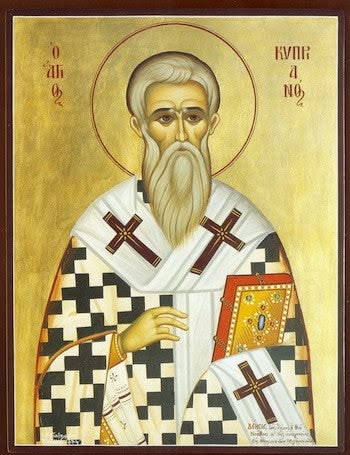
Cyprian of Carthage, On Works and Alms,14 (A.D. 254)
“You are mistaken, and are deceived, whosoever you are, that think yourself rich in this world. Listen to the voice of your Lord in the Apocalypse, rebuking men of your stamp with righteous reproaches: ‘Thou sayest,’ says He, ‘I am rich, and increased with goods, and have need of nothing; and knowest not that thou art wretched, and miserable, and poor, and blind, and naked. I counsel thee to buy of me gold tried in the fire, that thou mayest be rich; and white raiment, that thou mayest be clothed, and that the shame of thy nakedness may not appear in thee; and anoint thine eyes with eye-salve, that thou mayest see.’ You therefore, who are rich and wealthy, buy for yourself of Christ gold tried by fire; that you may be pure gold, with your filth burnt out as if by fire, if you are purged by almsgiving and righteous works. Buy for yourself white raiment, that you who had been naked according to Adam, and were before frightful and unseemly, may be clothed with the white garment of Christ. And you who are a wealthy and rich matron in Christ’s Church, anoint your eyes, not with the collyrium of the devil, but with Christ’s eye-salve, that you may be able to attain to see God, by deserving well of God, both by good works and character.”
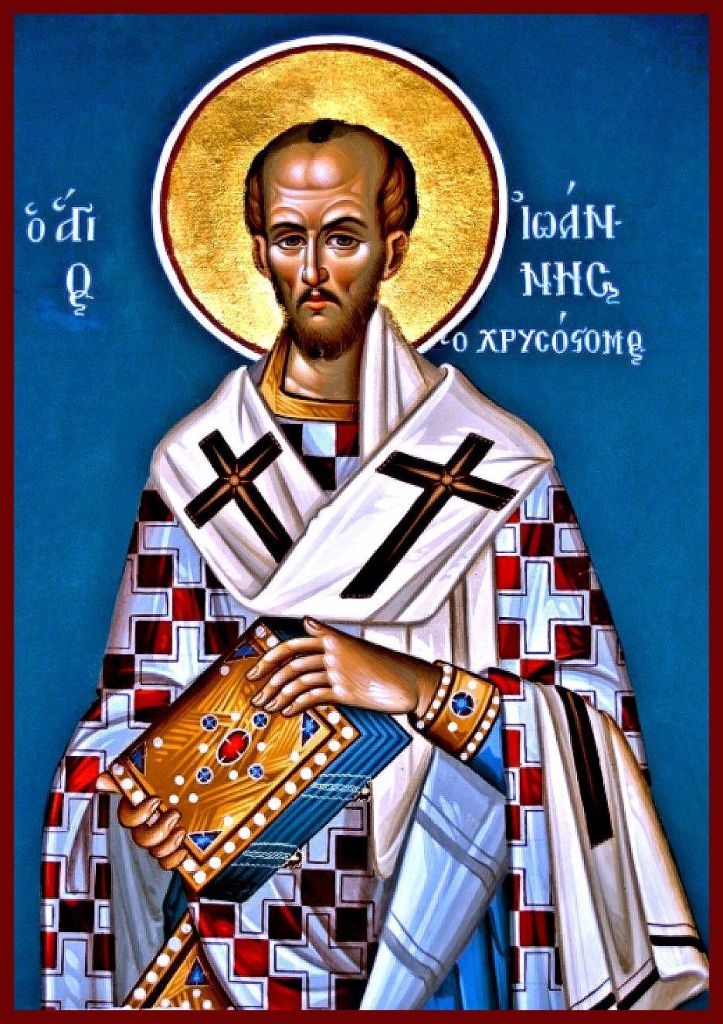
John Chrysostom, Romans, Homily VII:24,25 (A.D. 391)
“‘To declare His righteousness.’ What is the declaration of righteousness? Like the declaring of His riches, not only for Him to be rich Himself, but also to make others rich, or of life, not only that He is Himself living, but also that He makes the dead to live; and of His power, not only that He is Himself powerful, but also that He makes the feeble powerful. So also is the declaring of His righteousness not only that He is Himself righteous, but that He doth also make them that are filled with the putrefying sores ‘asapentas’ of sin suddenly righteous.”
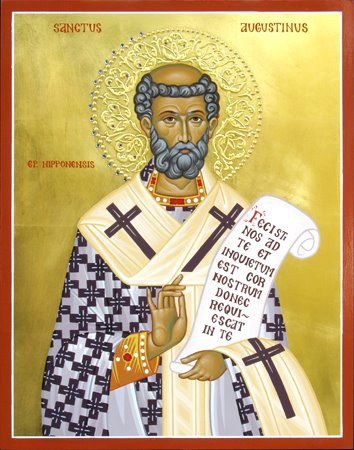
Augustine, On the Grace of Christ, 13:14 (A.D. 418)
“Although there are many who appear to do what the law commands, through fear of punishment, not through love of righteousness; and such righteousness as this the apostle calls ‘his own which is after the law,’–a thing as it were commanded, not given. When, indeed, it has been given, it is not called our own righteousness, but God’s, because it becomes our own only so that we have it from God. These are the apostle’s words: ‘That I may be found in Him, not having mine own righteousness which is of the law, but that which is through the faith of Christ the righteousness which is of God by faith.’ So great, then, is the difference between the law and grace, that although the law is undoubtedly of God, yet the righteousness which is ‘of the law’ is not ‘of God,’ but the righteousness which is consummated by grace is ‘of God.’ The one is designated ‘the righteousness of the law,’ because it is done through fear of the curse of the law; while the other is called ‘the righteousness of God,’ because it is bestowed through the beneficence of His grace, so that it is not a terrible but a pleasant commandment, according to the prayer in the psalm: ‘Good art Thou, O Lord, therefore in Thy goodness teach me Thy righteousness.”
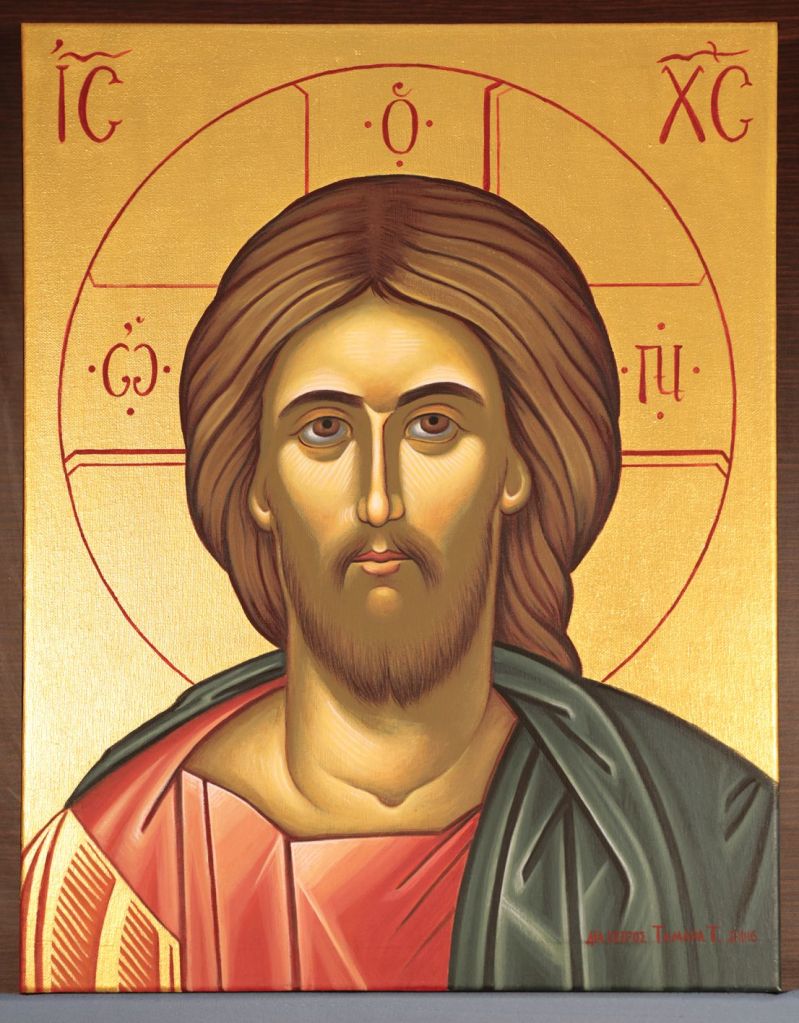
I tell you, unless your righteousness surpasses that of the scribes and Pharisees,
you will not enter into the kingdom of heaven.
Matthew 5, 20
PAX VOBISCUM
 Being Catholic
Leave a comment