PURGATORY
When everything is subjected to him, then the Son himself will also be
subjected to the one who subjected everything to him, so that God may
be all in all. Otherwise, what will people accomplish by having themselves
baptized for the dead? If the dead are not raised at all, then why are
they having themselves baptized for them?
1 Corinthians 15, 28-29
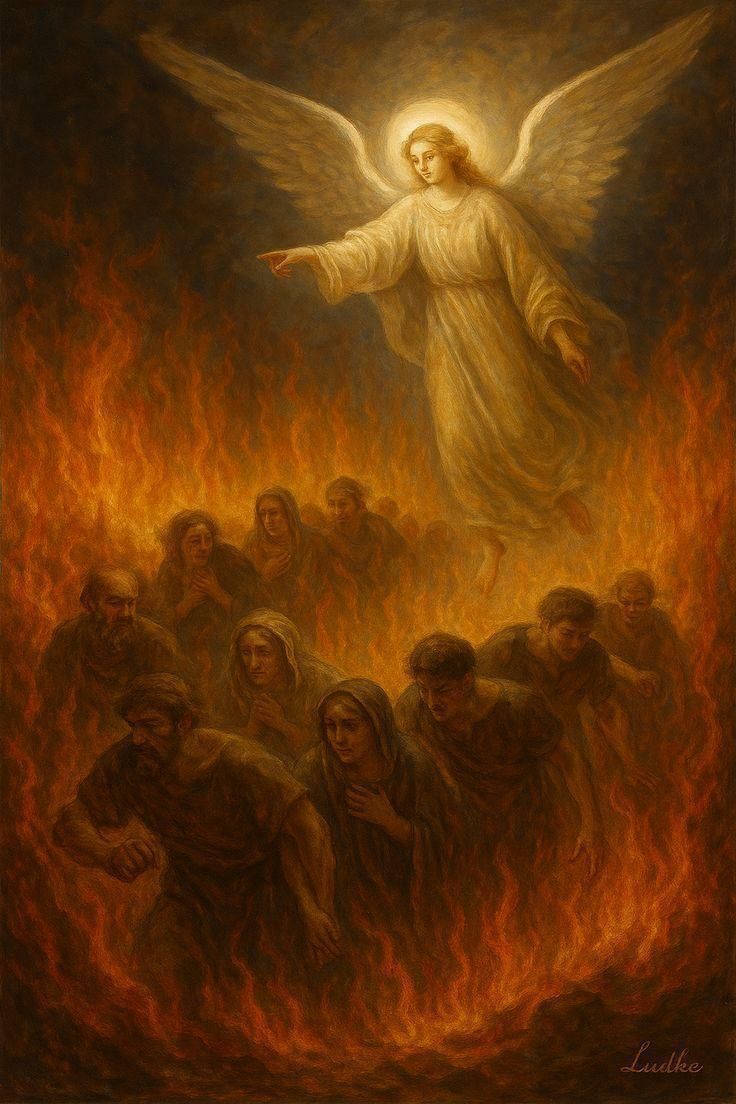
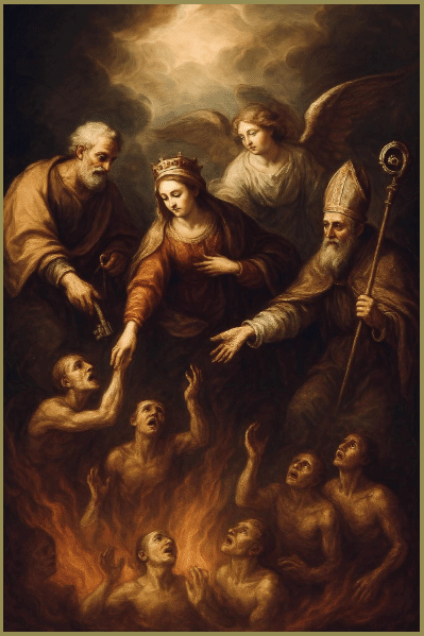
In his writings, St. Paul discusses the practice of baptizing “for” or on behalf of the dead, using the Greek preposition hyper (ὑπὲρ). This term can be understood to mean “for the sake of” or “for the benefit of” those in Christ awaiting the redemption of their bodies on the last day. Paul does not criticize the Christian community in Corinth for this tradition, indicating that he likely believed in the efficacy of such practices, suggesting that the sacrament, supportive prayers, and penitential works could assist the souls of the faithfully departed. If these souls were already in Heaven, they would not require help from prayers; conversely, if they were in Hell, they would not be able to benefit from them at all. This raises the question of where these departed souls might be located, and who can benefit from the living’s acts. The Catholic Church presents the concept of Purgatory as a probable answer—a state of existence that lies between Heaven and Hell.
And after the exhibition, Tryphaena again receives her. For her daughter
Falconilla had died, and said to her in a dream: Mother, thou shalt have this
stranger Thecla in my place, in order that she may pray concerning me,
and that I may be transferred to the place of the just.
Acts of Paul and Thecla
(A.D. 160)

They all, therefore, praised the ways of the Lord, the just judge who brings
to light the things that are hidden. Turning to supplication, they prayed
that the sinful deed might be fully blotted out. The noble Judas warned
the soldiers to keep themselves free from sin, for they had seen with
their own eyes what had happened because of the sin of those who had
fallen. He then took up a collection among all his soldiers, amounting to
two thousand silver drachmas, which he sent to Jerusalem to provide for
an expiatory sacrifice. In doing this he acted in a very excellent and noble
way, inasmuch as he had the resurrection of the dead in view; for if he
were not expecting the fallen to rise again, it would have been useless
and foolish to pray for them in death. But if he did this with a view to the
splendid reward that awaits those who had gone to rest in godliness, it
was a holy and pious thought.
Second Book of Maccabees 12, 41-45
Both the Corinthians and Judas Maccabeus participated in rituals that acknowledged the resurrection of the faithful departed. The author of the Old Testament text suggests that it would have been “useless and foolish” for Judas Maccabeus to offer a sacrificial sin offering on behalf of the deceased if there were no hope for their resurrection. This idea is echoed by the Apostle Paul, who asks, “If the dead are not raised at all, then why are they having themselves baptized for them?” Paul was likely referencing the Maccabees text in his letter to the Corinthians. He emphasizes that baptism for the dead would be unnecessary only if there were no resurrection on the last day, underscoring that this practice persists alongside Christ’s eternal atonement for sin.
Additionally, temporal atonement is presented as an obligation for the faithful, linking this act to Christ’s temporal propitiation in His humanity as the second Adam, as indicated in 1 Corinthians 15:45-49. In Maccabees 12, God is depicted as a judge, highlighting themes of divine judgment and the remission of sin. This passage indicates the complete erasure of sinful actions and the liberation from the temporal consequences of sin through the appeasement of divine justice.
To restore the balance of justice between God and humanity, addressing instances when individuals succumb to temptation is important. Personal atonement for sins is essential, which involves accepting and enduring any temporal consequences as a means of purifying one’s soul. Upon death, individuals are believed to confront their accuser, and the implication of Jesus’ teaching to make peace with this accuser before facing judgment emphasizes the necessity of settling any moral debts. By resisting temptation and renouncing the empty promises of evil in this life, individuals can ensure there are no accusations against them when they stand before God.
“Without delay, on that very night, this was shown to me in a vision. I saw
Dinocrates going out from a gloomy place, where also there were several others,
and he was parched and very thirsty, with a filthy countenance and pallid colour, and
the wound on his face which he had when he died. This Dinocrates had been my
brother after the flesh, seven years of age? Who died miserably with disease…But I
trusted that my prayer would bring help to his suffering; and I prayed for him every
day until we passed over into the prison of the camp, for we were to fight in the
camp-show. Then was the birth-day of Gets Caesar, and I made my prayer for my
brother day and night, groaning and weeping that he might be granted to me. Then,
on the day on which we remained in fetters, this was shown to me. I saw that that
place which I had formerly observed to be in gloom was now bright; and Dinocrates,
with a clean body well clad, was finding refreshment. And where there had been a
wound, I saw a scar; and that pool which I had before seen, I saw now with its margin
lowered even to the boy’s navel. And one drew water from the pool incessantly, and
upon its brink was a goblet filled with water; and Dinocrates drew near and began to
drink from it, and the goblet did not fail. And when he was satisfied, he went away
from the water to play joyously, after the manner of children, and I awoke. Then I
understood that he was translated from the place of punishment.”
The Passion of Perpetua and Felicitias, 2:3-4
(A.D. 202)

“Make friends quickly with your accuser while you are going with him
to court, lest your accuser hand you over to the judge, and the judge to
the guard, and you be put in prison; truly I say to you, you will never get
out till you have paid the last penny.”
Matthew 5, 25-26
The concept of the particular judgment of sinners at the moment of death highlights the temporary consequences and penalties associated with sin. This idea can be likened to a figurative “debtor’s prison,” a metaphor for purgatory. In this context, Jesus refers to the “accuser,” which is understood to mean Satan. The Greek term for accuser, “antidikos” (ἀντίδικος), signifies “opponent,” and it appears in the First Letter of Peter (5:8-9), which warns, “Your adversary (ἀντίδικος) the devil is prowling around like a roaring lion looking for someone to devour. Resist him steadfast in the faith.” This portrayal illustrates how Satan seeks to undermine our souls, further amplifying the torment by accusing us of our sins before God, as seen in biblical references such as Zechariah 3:1 and the Book of Job 1:6-12.
The reference to Christ preaching to “the spirits in prison” in 1 Peter 3:19 can be understood in the context of Catholic tradition regarding the Harrowing of Hell, in which Christ, after His death and before His resurrection, descended into the realm of the dead. This act symbolizes His triumph over death and sin, offering salvation even to those who had died before His resurrection. It reflects the mercy of God, who desires salvation for all. The “harrowing of hell” refers to Christ’s descent into Sheol (Hebrew) or Hades (Greek), the shadowy realm of the dead, rather than the final place of punishment (Gehenna). It is understood as Christ descending to the abode of the righteous deceased to free them, not a descent into eternal, burning hell.
To restore the balance of justice between God and humanity, addressing instances when individuals succumb to temptation is important. Personal atonement for sins is essential, which involves accepting and enduring any temporal consequences as a means of purifying one’s soul. Upon death, individuals are believed to confront their accuser, and the implication of Jesus’ teaching to make peace with this accuser before facing judgment emphasizes the necessity of settling any moral debts. By resisting temptation and renouncing the empty promises of evil in this life, individuals can ensure there are no accusations against them when they stand before God.
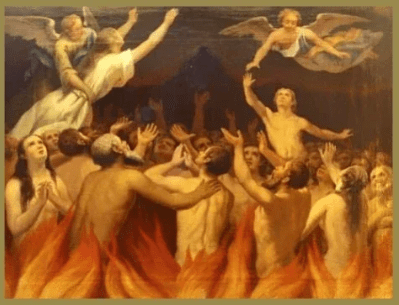
The experience of spending time in the debtor’s prison can be understood as a metaphor for the unresolved consequences of our actions. It highlights that while sins may be forgiven through repentance and acts of contrition, they still require temporal satisfaction on our part, often in the form of further acts of penance. This process is essential for removing the residual effects of sin from our souls. In essence, the debt incurred by sin can be alleviated only through the fulfillment of penance. Engaging in acts of penance counterbalances the vain satisfaction or pleasure derived from sinful behaviors, thereby completing the necessary path to redemption.
The teachings of Scripture indicate that Christ’s suffering and death do not exempt us from owing something to God for the offenses against His sovereign dignity ( See Matthew 5:17, Job 42:6, Lamentations 2:14, Ezekiel 18:21, Jeremiah 31:19, Romans 2:4, and Revelation 2:5). If repentance alone sufficed, there would be no further need for penance. While Christ made a profound eternal sacrifice for humanity’s sins, the individual believer must still engage in temporal restitution for their personal sins to fully access the merits of His sacrifice and achieve both temporal and eternal satisfaction.
This is from Jesus himself: “No, I say to you: but unless you shall do penance, you shall all likewise perish” (Lk 13:3); “Bring forth, therefore, fruit worthy of penance” (Matthew 3:8). True repentance for the forgiveness of sin calls for fruit worthy of our act of contrition. For instance, our outward acts (alms-giving/fasting) must conform to our inner disposition or spiritual reality (charity/temperance) to offset our vices and sins (greed/gluttony), which have been forgiven through repentance pending full temporal restitution. We are temporarily consigned to purgatory if we have any outstanding debts to pay when we die.
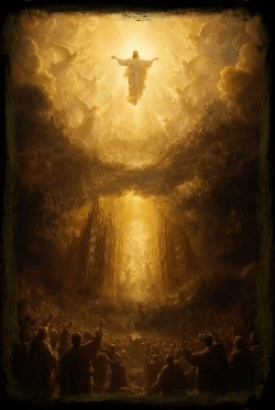
Additionally, the Parable of the Wedding Feast, found in Matthew 22:1-14, serves as an allegory for the Kingdom of Heaven and the invitation to the wedding feast (of the lamb). While the parable does not explicitly reference purgatory, its themes of judgment, purification, and the importance of wearing an appropriate “wedding garment” resonate with Catholic teachings regarding purgatory. This state is viewed as a form of purification that believers undergo before entering heaven.
Revelation 21:27 is a significant verse that outlines the criteria for entering heaven. It states, “Nothing impure will ever enter it, nor will anyone who does what is shameful or deceitful, but only those whose names are written in the Lamb’s book of life,” the wedding guest list in my view. This passage emphasizes the importance of both moral and spiritual purity as essential requirements for access to heaven through the redemptive merits of Jesus Christ.
Have mercy on me, O God, according to thy steadfast love; according to
thy abundant mercy blot out my transgressions. Wash me thoroughly
from my iniquity, and cleanse me from my sin! For I know my
transgressions, and my sin is ever before me. Against thee, thee only,
have I sinned, and done that which is evil in thy sight, so that thou art
justified in thy sentence and blameless in thy judgment.
Psalm 51, 1-4
In a theological context, it is understood that individuals owe a debt to God for their offenses against Him, and they are encouraged to seek restitution to restore this relationship. This idea of satisfaction involves repairing the harm done to God to regain His favor. A sincere act of reparation must include an element of sacrifice and personal pain, reflecting commutative justice principles, which demand that individuals render to others what is rightfully theirs. When people sin against God, they withhold what is due—specifically, their love and obedience. Simply apologizing is insufficient to restore balance in this relationship; a deeper expression of love and commitment is required. This can be achieved by accepting personal suffering or by making sacrifices and offering them to God as a form of spiritual worship aimed at reparation. Such acts counterbalance the selfish pleasures that underlie sinful behavior, helping to restore equity in one’s relationship with the divine.
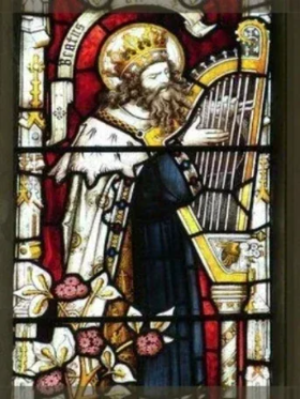
Pain and suffering can be viewed as lacking spiritual and redemptive value when not accompanied by genuine repentance. Repentance itself may be considered incomplete if the earthly consequences of sin remain unaddressed. A biblical example of this is found in the story of King David, who committed grave sins, including murder and adultery. After sincerely repenting with a contrite heart, God forgave David, making his sin offering valid. However, to fully address the severity of his transgressions and restore a sense of justice, God allowed the death of the child conceived during David’s adultery with Bathsheba and permitted the violation of David’s wives (2 Sam 12:9-10, 14, 18-19). These consequences of David’s sinful acts serve as retributive justice, illustrating the idea of ‘an eye for an eye.’ Only through this painful process could David’s relationship with God be healed entirely. He accepted his suffering as a necessary temporal punishment for his sins, thereby facilitating the restoration of his spiritual connection with God. This reconciliation was made possible through the anticipated merits of Christ.
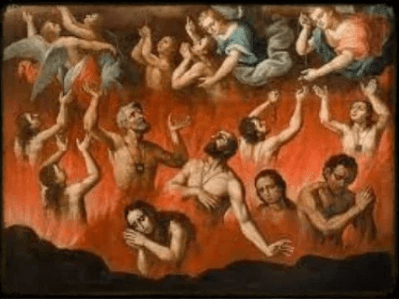
Purgatory is often misunderstood as a concept originating solely from medieval Catholic theology; however, its roots are much older and more complex. Ancient Jewish texts, particularly those from the Talmud and other rabbinic writings, describe a transitional state after death in which souls undergo purification. Various tractates in the talmud discuss the afterlife, the resurrection of the dead, and the role of prayers for the deceased (e.g., Berakhot 18b). Mishnah Berakhot discusses prayers for the dead and the importance of remembering those who have passed.
Moreover, Writings from early Church Fathers, including St. Augustine and St. Gregory the Great, also emphasize the significance of intercessory prayers, suggesting that such acts can aid the souls of the departed. St. Augustine discusses the importance of prayer for the deceased in his work ‘City of God.’ In Book 21, Chapter 24, he emphasizes the need for intercessory prayers for the dead, illustrating the belief in the efficacy of prayers for souls in purgatory. [Reference: ‘Augustine of Hippo, City of God’. Translated by Henry Bett. 1950.] Pope St. Gregory the Great: In ‘Dialogues,’ particularly in Book 4, Gregory the Great underscores the practice of praying for souls in purgatory, noting that such prayers can alleviate their suffering and expedite their purification. [Reference: ‘Gregory the Great. Dialogues’. Translated by Odo John Zimmerman. 1959.]
EARLY SACRED TRADITION
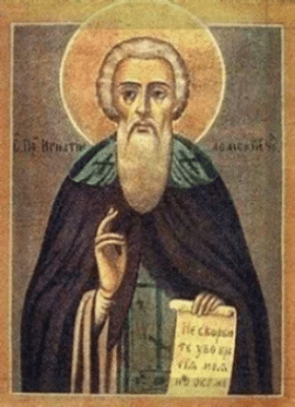
St. Clement of Alexandria (post A.D. 202)
Stromata, 6:14
“Accordingly, the believer, through great discipline, divesting himself of the
passions, passes to the mansion which is better than the former one, viz., to the
greatest torment, taking with him the characteristic of repentance from the sins
he has committed after baptism. He is tortured then still more–not yet or not
quite attaining what he sees others to have acquired. Besides, he is also ashamed
of his transgressions. The greatest torments, indeed, are assigned to the believer.
For God’s righteousness is good, and His goodness is righteous. And though the
punishments cease in the course of the completion of the expiation and
purification of each one, yet those have very great and permanent grief who
are found worthy of the other fold, on account of not being along with those
that have been glorified through righteousness.”

Tertullian (A.D. 210)
A Treatise on the Soul, 35
“That allegory of the Lord which is extremely clear and simple in its meaning,
and ought to be from the first understood in its plain and natural sense…Then,
again, should you be disposed to apply the term ‘adversary’ to the devil, you are
advised by the (Lord’s) injunction, while you are in the way with him, ‘to make
even with him such a compact as may be deemed compatible with the
requirements of your true faith. Now the compact you have made respecting
him is to renounce him, and his pomp, and his angels. Such is your agreement in
this matter. Now the friendly understanding you will have to carry out must
arise from your observance of the compact: you must never think of getting
back any of the things which you have abjured, and have restored to him, lest he
should summon you as a fraudulent man, and a transgressor of your
agreement, before God the Judge (for in this light do we read of him, in another
passage, as ‘the accuser of the brethren,’ or saints, where reference is made to
the actual practice of legal prosecution); and lest this Judge deliver you over to
the angel who is to execute the sentence, and he commit you to the prison
of hell, out of which there will be no dismissal until the smallest even of your
delinquencies be paid off in the period before the resurrection. What can be a
more fitting sense than this? What a truer interpretation?”
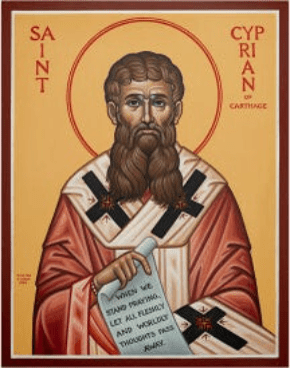
St. Cyprian of Carthage (A.D. 253)
To Antonianus, Epistle 51 (55):20
“For to adulterers even a time of repentance is granted by us, and peace is
given. Yet virginity is not therefore deficient in the Church, nor does the
glorious design of continence languish through the sins of others. The Church,
crowned with so many virgins, flourishes, and chastity and modesty preserve
the tenor of their glory. Nor is the vigour of continence broken down because
repentance and pardon are facilitated to the adulterer. It is one thing to stand
for pardon, another thing to attain to glory: it is one thing, when cast into
prison, not to go out thence until one has paid the uttermost farthing; another
thing at once to receive the wages of faith and courage. It is one thing, tortured
by long suffering for sins, to be cleansed and long purged by fire; another to
have purged all sins by suffering. It is one thing, in fine, to be in suspense till the
sentence of God at the day of judgment; another to be crowned by the Lord at once.”
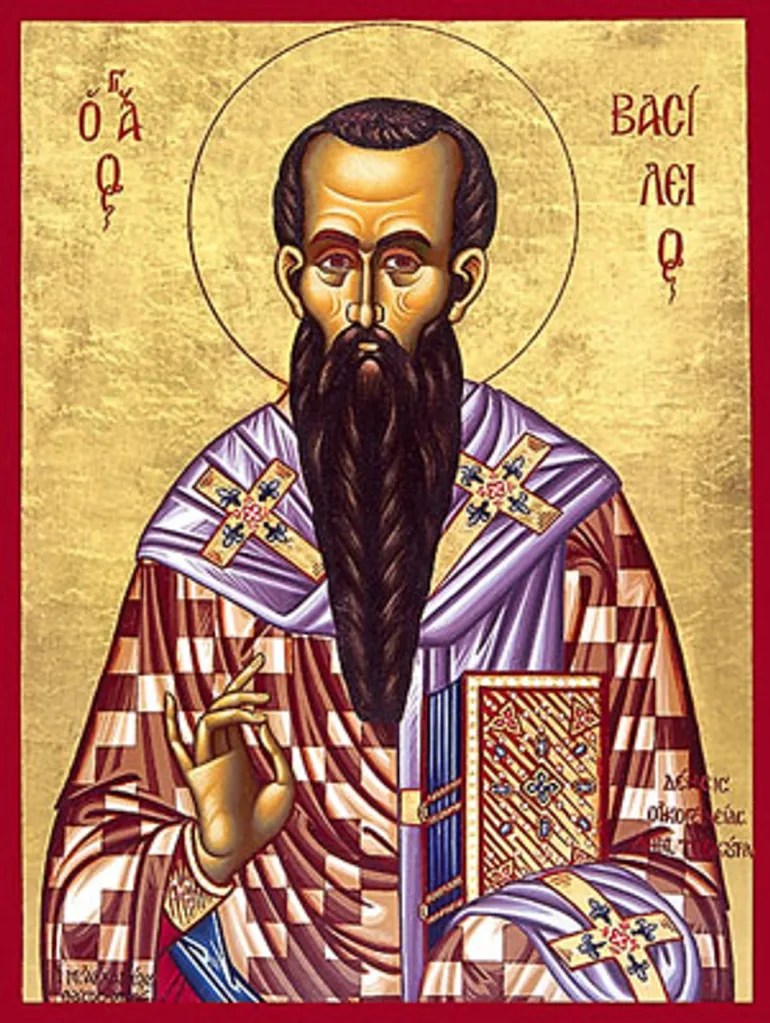
St. Basil the Great (ante A.D. 370)
Homilies on the Psalms, 7:2
“I think that the noble athletes of God, who have wrestled all their lives with the invisible enemies, after they have escaped all of their persecutions and have come to the end of life, are examined by the prince of this world; and if they are found to have any wounds from their wrestling, any stains or effects of sin, they are detained. If, however, they are found unwounded and without stain, they are, as unconquered, brought by Christ into their rest.”
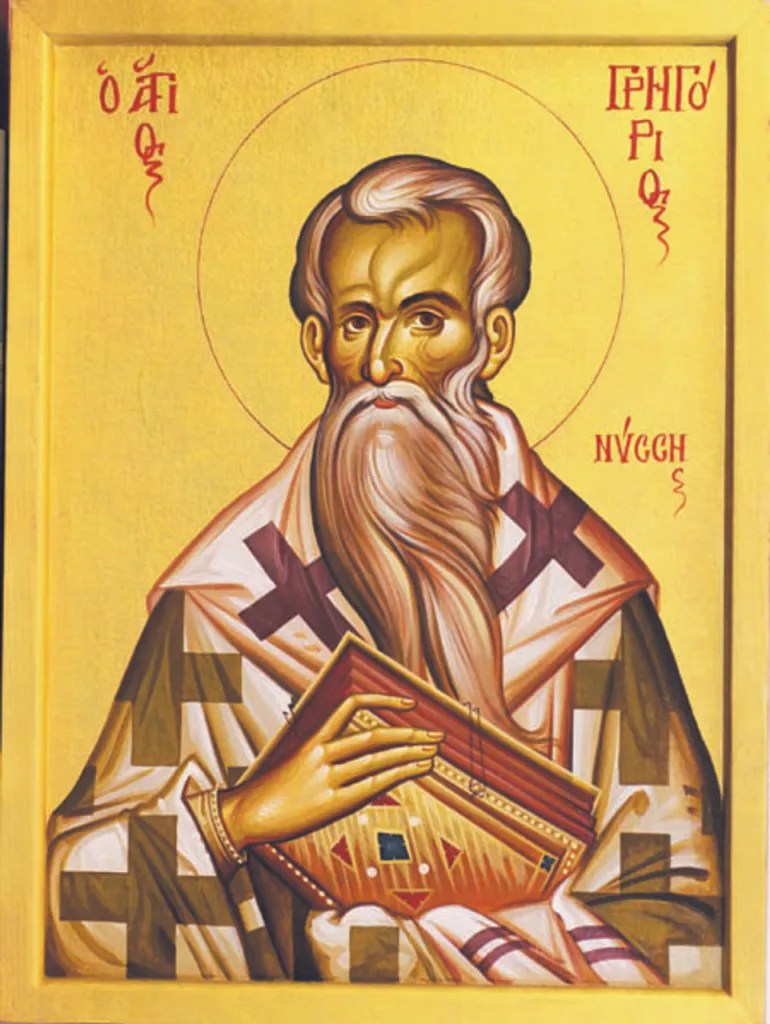
St. Gregory of Nyssa (ante A.D. 394)
Sermon on the Dead, PG 13:445,448
“When he has quitted his body, and the difference between virtue and vice is known, he cannot approach God till the purging fire shall have cleansed the stains with which his soul was infested. That same fire in others will cancel the corruption of matter, and the propensity to evil.”
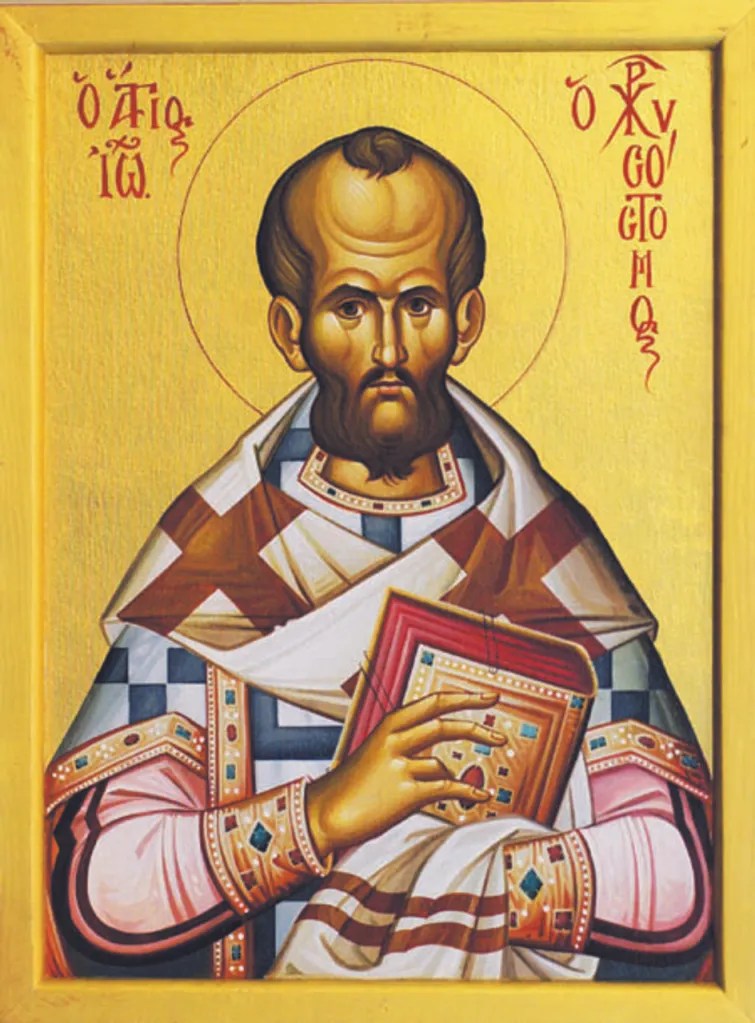
St. John Chrysostom (ante A.D. 404)
Homilies on Phillipians, 3
“Weep for the unbelievers; weep for those who differ in nowise from them, those who depart hence without the illumination, without the seal! They indeed deserve our wailing, they deserve our groans; they are outside the Palace, with the culprits, with the condemned: for, “Verily I say unto you, Except a man be born of water and the Spirit, he shall not enter into the kingdom of Heaven.” Mourn for those who have died in wealth, and did not from their wealth think of any solace for their soul, who had power to wash away their sins and would not. Let us all weep for these in private and in public, but with propriety, with gravity, not so as to make exhibitions of ourselves; let us weep for these, not one day, or two, but all our life. Such tears spring not from senseless passion, but from true affection. The other sort are of senseless passion. For this cause they are quickly quenched, whereas if they spring from the fear of God, they always abide with us. Let us weep for these; let us assist them according to our power; let us think of some assistance for them, small though it be, yet still let us assist them. How and in what way? By praying and entreating others to make prayers for them, by continually giving to the poor on their behalf.”
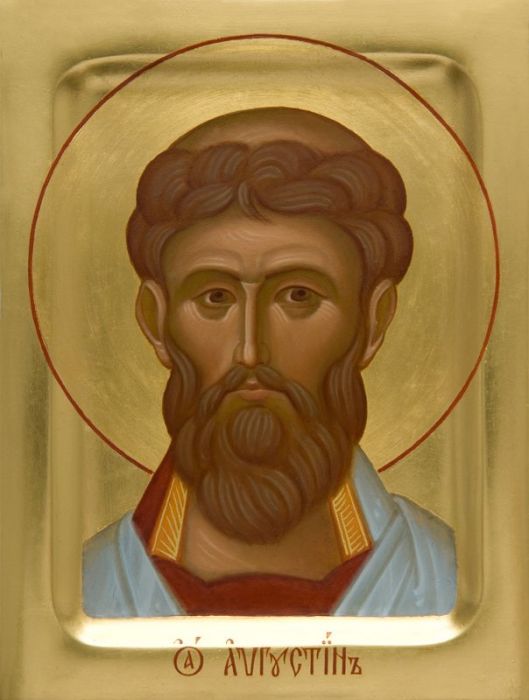
St. Augustine of Hippo (A.D. 413)
Faith and Works, 1:1
“If the baptized person fulfills the obligations demanded of a Christian, he does well. If he does not–provided he keeps the faith, without which he would perish forever–no matter in what sin or impurity remains, he will be saved, as it were, by fire; as one who has built on the foundation, which is Christ, not gold, silver, and precious stones, but wood, hay straw, that is, not just and chasted works but wicked and unchaste works.”
“The servant who knows the master’s will and does not get ready
or does not do what the master wants will be beaten with many blows.
But the one who does not know and does things deserving punishment
will be beaten with few blows. From everyone who has been given much,
much will be demanded; and from the one who has been entrusted with much,
much more will be asked.”
Luke 12, 47-48
PAX VOBISCUM
 Being Catholic
Leave a comment