THE MYSTICAL BODY OF CHRIST
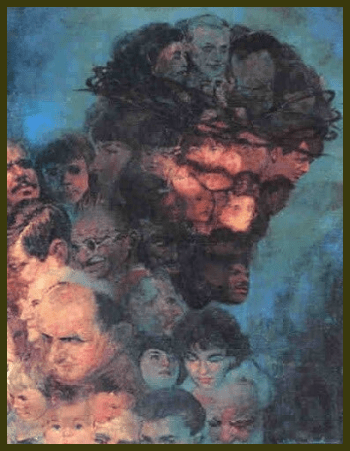
For just as the body is one and has many members, and all the members of the body, though many, are one body, so it is with Christ. For in the one Spirit we were all baptized into one body—Jews or Greeks, slaves or free—and we were all made to drink of one Spirit. Indeed, the body does not consist of a single member, but of many. If the foot were to say, “Because I am not a hand, I do not belong to the body,” that would not make it any less a part of the body. And if the ear would say, “Because I am not an eye, I do not belong to the body,” that would not make it any less a part of the body. If the whole body were an eye, where would the hearing be? If the whole body were hearing, where would the sense of smell be? But as it is, God arranged the members in the body, each one of them, as he chose. If all were a single member, where would the body be? As it is, there are many members, yet one body. The eye cannot say to the hand, “I have no need of you,” nor again the head to the feet, “I have no need of you.” On the contrary, the members of the body that seem to be weaker are indispensable, and those members of the body that we think less honorable we clothe with greater honor. Our less respectable members are treated with greater respect. In contrast, our more respectable members do not need this. But God has so arranged the body, giving the greater honor to the inferior member, that there may be no dissension within the body, but the members may have the same care for one another. If one member suffers, all suffer together with it; if one member is honored, all rejoice together with it. Now you are the body of Christ and individual members of it.
1 Corinthians 12:12-27
The text from 1 Corinthians 12:12-27 provides a foundation for understanding the Catholic doctrine of the Communion of Saints and the concept of the Church as the Body of Christ. In this passage, Saint Paul emphasizes the importance of interconnectedness and mutual dependence among all members of the Church, which he analogously describes as a single body with many parts. Each member, regardless of their role or function, contributes to the overall health and mission of the community of believers. Paul illustrates that just as the human body is composed of various organs, each with its unique purpose, so too is the Church made up of diverse individuals, including laity, clergy, and religious. This diversity enriches the Church and allows it to fulfill its calling more effectively.
Additionally, Saint Paul underscores that every member is indispensable; no one can claim superiority over another, for all are equally valued in the eyes of God. This mutual respect fosters unity and promotes a spirit of cooperation, reinforcing the belief that the Church, as the Body of Christ, is not merely a collection of individuals but a living organism bound by faith, love, and shared mission. Ultimately, this passage encapsulates the essence of the Communion of Saints, reminding believers of their profound connection to one another and to Christ, who is the head of the Church.
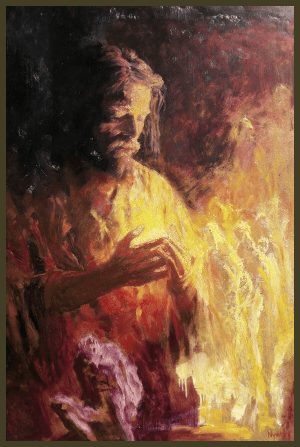
The passage emphasizes that although the Church is composed of a diverse array of members, they collectively form one unified body. This concept is akin to the Communion of Saints, which articulates that the Church spans beyond the mere assembly of the living, often referred to as the Church Militant. It also encompasses the souls of the faithful in heaven, known as the Church Triumphant, and those undergoing purification in purgatory, termed the Church Suffering. Each member, regardless of their state—whether living, in heaven, or in purgatory—contributes significantly to the spiritual fabric of the larger body of Christ. This interconnectedness underscores the conviction that all members share a profound relationship, united in faith and purpose, and actively participate in the Church’s ongoing mission to spread love, hope, and salvation.
The description of the body emphasizes a profound spiritual communion that transcends both time and space. Just as each part of the physical body serves a distinct and essential function—whether it be the strength of the muscles, the sensitivity of the skin, or the vital processes of the organs—so too does every saint, including those officially canonized and those known only to God, play a critical role in glorifying the body of Christ. This concept underscores the belief that believers possess the ability to intercede for one another, much like different members of the body collaborate and support each other’s functions. Each saint’s unique contributions enrich the spiritual tapestry of the faithful, reinforcing the idea that a collective strength emerges when individuals unite in prayer and purpose. Through this interconnectedness, the community of believers reflects the divine harmony inherent in the body of Christ, fostering a deeper sense of unity among all members.
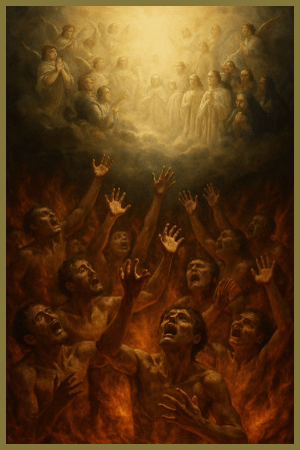
Saint Paul’s assertion that “the members of the body that seem to be weaker are indispensable” underscores a profound truth that resonates deeply within the Catholic tradition, particularly in relation to the Communion of Saints. This concept emphasizes that no saint, regardless of their historical context or earthly accomplishments, is insignificant; each one plays a vital role in the tapestry of faith. The Church honors every saint, recognizing that their contributions—often borne out of humility and personal sacrifice—reflect a deep commitment to God and His grace.
Moreover, this perspective challenges the notion that holiness is exclusively tied to social status or public acclaim. Instead, it emphasizes that genuine holiness stems from a personal relationship with God, marked by faith, love, and selflessness. The Catholic belief in the universal call to holiness invites every person, regardless of their life circumstances, to participate fully in the Church’s mission. Each individual, whether a canonized saint or an ordinary believer, has the potential to enrich the body of Christ through their unique gifts and experiences, thereby reinforcing the idea that everyone has an irreplaceable role in building up the community of believers. This inclusive understanding fosters a spirit of unity, encouraging Catholics to recognize the value in every person and affirm that everyone can contribute meaningfully to the life of the Church and the world.
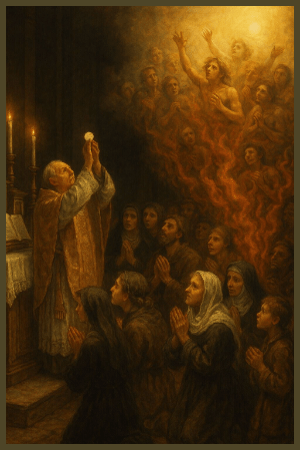
The notion that if one member suffers, all suffer together, and if one is honored, all rejoice, underscores the profound sense of community and mutual interdependence among believers. This principle, rooted in the teachings of the Apostle Paul, reflects the biblical idea that the Church is one body, where each member plays a vital role. The doctrine of the Communion of Saints embodies this concept, as Catholics hold that the saints in heaven not only share in the joys and struggles of those on earth but also actively intercede on their behalf. This belief fosters a deep spiritual connection, encouraging the faithful to support one another in their individual and collective journeys of faith. It cultivates a sense of solidarity, prompting believers to engage in acts of compassion, prayer, and communal worship, thereby enriching the spiritual fabric of the entire Church. Through this interconnectedness, believers are reminded that their actions contribute to the well-being and growth of the entire faith community.
The text emphasizes the critical role of Christ as the head of the body, which refers to the Church. This perspective highlights the conviction that all members of the Church are interconnected through their shared faith in Christ, deriving their identity and purpose from Him alone. The notion of the Communion of Saints highlights that, through Christ’s sacrificial death and resurrection, all believers are united—not only in their communal worship but also in their spiritual journey toward salvation. His grace sustains and nourishes this community, empowering each member to grow in holiness and guiding them toward eternal life with God. This unity and grace remind the faithful of their collective mission to support one another and strive for a deeper relationship with Christ.
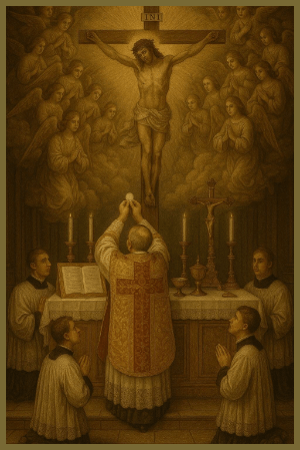
In conclusion, 1 Corinthians 12:12-27 eloquently encapsulates the core principles of the Catholic doctrine of the Communion of Saints. This passage illustrates the significance of each individual member within the Church as part of one unified body, emphasizing the vital necessity of unity and mutual care among believers. By comparing the Church to a human body, St. Paul highlights that just as each body part has its unique function and value, so too does every member—whether living or deceased—contribute to the spiritual richness and diverse tapestry of the faith community.
Importantly, this scripture underscores Christ’s central role as the head of the Body, guiding and sustaining its members through grace and love. This understanding not only invites believers to deepen their awareness of their interconnectedness with one another but also encourages a commitment to nurture those relationships, recognizing that they extend beyond earthly life. In doing so, believers are inspired to embrace their shared vocation in the journey toward eternal communion with God, fostering a profound sense of solidarity with the saints in heaven and with those still on their earthly pilgrimage.
EARLY SACRED TRADITION
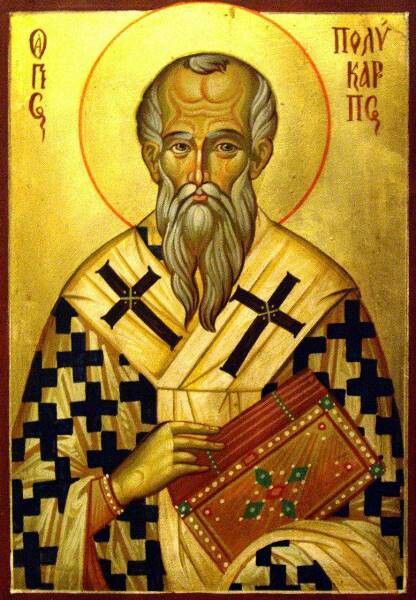
Martyrdom of Polycarp 17,18 (A.D. 157)
“That it is neither possible for us ever to forsake Christ, who suffered for the salvation of such as shall be saved throughout the whole world (the blameless one for sinners), nor to worship any other. For Him indeed, as being the Son of God, we adore; but the martyrs, as disciples and followers of the Lord, we worthily love on account of their extraordinary affection towards their own King and Master, of whom may we also be made companions and fellow disciples! The centurion then, seeing the strife excited by the Jews, placed the body in the midst of the fire, and consumed it. Accordingly, we afterwards took up his bones, as being more precious than the most exquisite jewels, and more purified than gold, and deposited them in a fitting place, whither, being gathered together, as opportunity is allowed us, with joy and rejoicing, the Lord shall grant us to celebrate the anniversary of his martyrdom, both in memory of those who have already finished their course, and for the exercising and preparation of those yet to walk in their steps.”
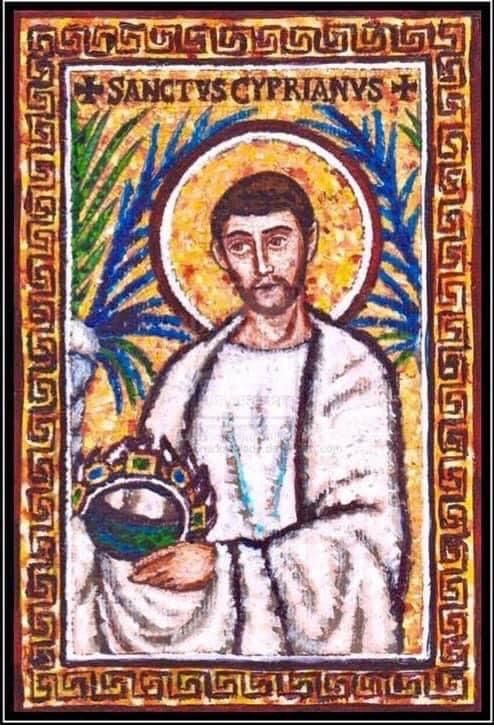
Cyprian, To Clergy and People, Epistle 33(39):3
(A.D. 250)
“Nor is that kind of title to glories in the case of Celerinus, our beloved, an unfamiliar and novel thing. He is advancing in the footsteps of his kindred; he rivals his parents and relations in equal honours of divine condescension. His grandmother, Celerina, was some time since crowned with martyrdom. Moreover, his paternal and maternal uncles, Laurentius and Egnatius, who themselves also were once warring in the camps of the world, but were true and spiritual soldiers of God, casting down the devil by the confession of Christ, merited palms and crowns from the Lord by their illustrious passion. We always offer sacrifices for them, as you remember, as often as we celebrate the passions and days of the martyrs in the annual commemoration. Nor could he, therefore, be degenerate and inferior whom this family dignity and a generous nobility provoked, by domestic examples of virtue and faith. But if in a worldly family it is a matter of heraldry and of praise to be a patrician, of bow much greater praise and honour is it to become of noble rank in the celestial heraldry! I cannot tell whom I should call more blessed,–whether those ancestors, for a posterity so illustrious, or him, for an origin so glorious. So equally between them does the divine condescension flow, and pass to and fro, that, just as the dignity of their offspring brightens their crown, so the sublimity of his ancestry illuminates his glory.”
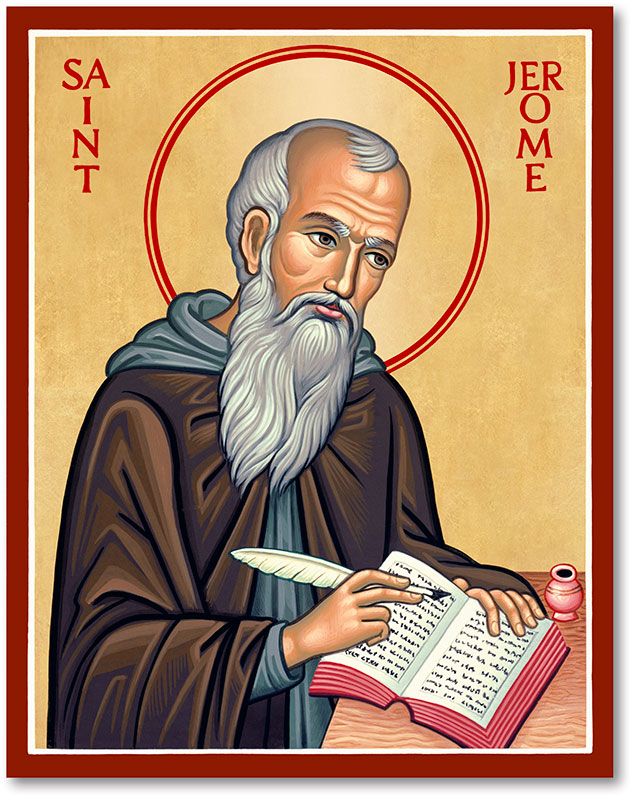
Jerome, To Riparius, Epistle 109:1
(A.D. 404)
“We, it is true, refuse to worship or adore, I say not the relics of the martyrs, but even the sun and moon, the angels and archangels, the Cherubim and Seraphim and ‘every name that is named, not only in this world but also in that which is to come.’ For we may not “serve the creature rather than the Creator, who is blessed for ever. Still we honour the relics of the martyrs, that we may adore Him whose martyrs they are. We honour the servants that their honour may be reflected upon their Lord who Himself says:–‘he that receiveth you receiveth me.’ I ask Vigilantius, Are the relics of Peter and of Paul unclean? Was the body of Moses unclean, of which we are told (according to the correct Hebrew text) that it was buried by the Lord Himself? And do we, every time that we enter the basilicas of apostles and prophets and martyrs, pay homage to the shrines of idols? Are the tapers which burn before their tombs only the tokens of idolatry? I will go farther still and ask a question which will make this theory recoil upon the head of its inventor and which will either kill or cure that frenzied brain of his, so that simple souls shall be no more subverted by his sacrilegious reasonings. Let him answer me this, Was the Lord’s body unclean when it was placed in the sepulchre? And did the angels clothed in white raiment merely watch over a corpse dead and defiled, that ages afterwards this sleepy fellow might indulge in dreams and vomit forth his filthy surfeit, so as, like the persecutor Julian, either to destroy the basilicas of the saints or to convert them into heathen temples?”
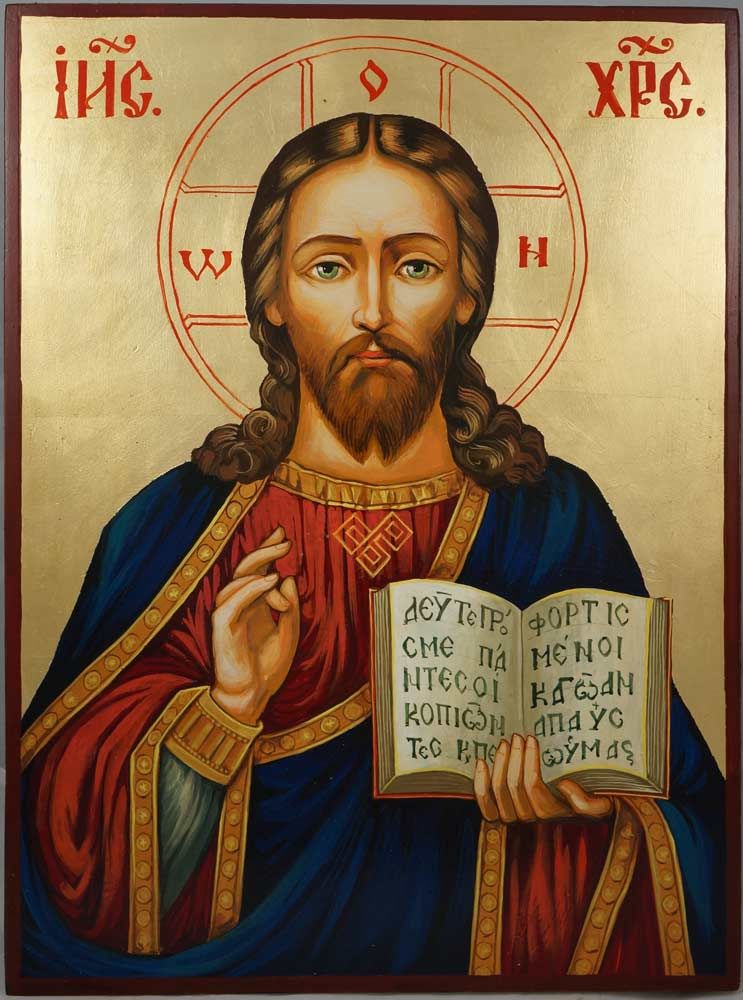
I am the vine; you are the branches.
John 15, 5
PAX VOBISCUM
 Being Catholic
Leave a comment